
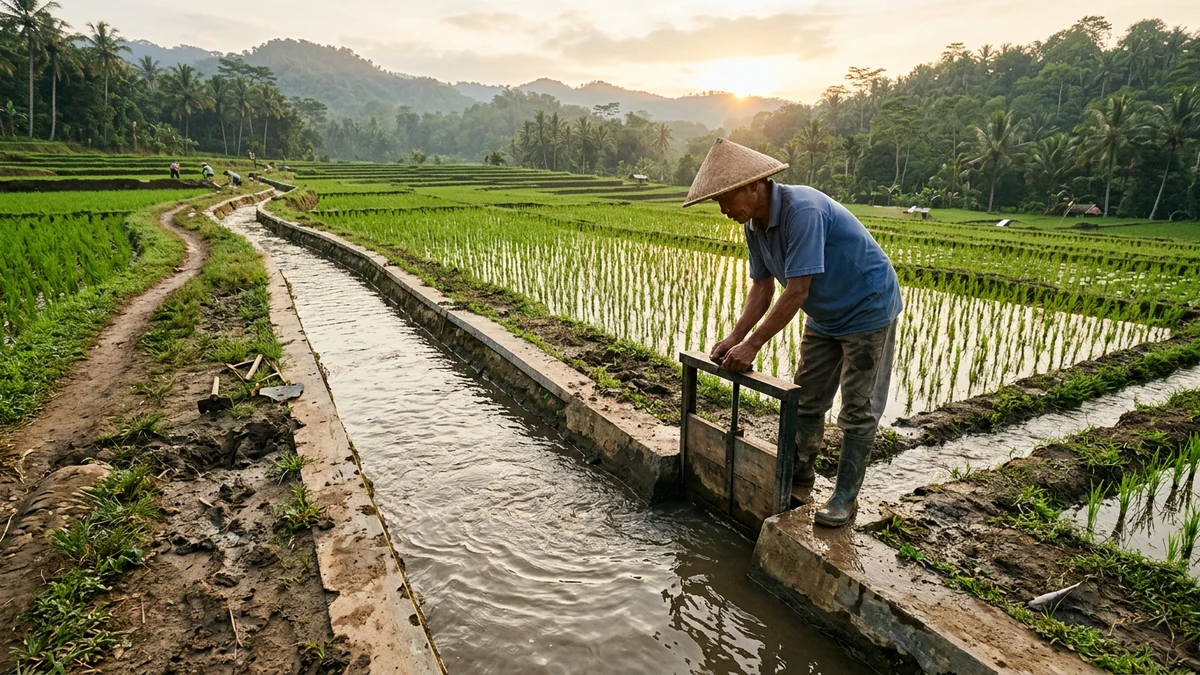
Water has always been central to farming, but it is becoming a more strategic issue for Indonesian farms. Rain may arrive later than expected, fall heavily in a short period, or stop when crops need it most. Farmers are no longer managing only irrigation; they are managing uncertainty.
Good water management is not simply about adding more water. It is about knowing when the crop needs water, how long the soil can hold it, how quickly excess water leaves the field, and what happens to quality when the timing is wrong.
Water is now a management question
In many farming areas, rainfall is less predictable than the calendar suggests. A farmer may prepare land expecting a normal rainy season, then face a dry spell during early growth. Another farmer may get enough total rain but in storms so heavy that water runs off before the soil can store it.
This changes the way farmers should think. The question is not only whether there is water, but whether water is available at the right moment. Crops need different water conditions during germination, vegetative growth, flowering, fruiting and harvest. Stress at one stage can reduce yield or quality even if water is available later.
Too little water is only half the problem
Drought is easy to recognize because plants wilt and soil cracks. Excess water can be more deceptive. Standing water can reduce oxygen around roots, encourage disease, delay field work, wash away nutrients and damage soil structure. For some crops, too much water near harvest can also reduce quality or increase post-harvest problems.
In vegetable fields, waterlogging may cause root disease and uneven growth. In maize, poor drainage can weaken root development. In coffee farms, heavy rain can interfere with harvest and drying. Each crop reacts differently, but the principle is the same: water must move through the farm in a controlled way.
Soil decides how long water stays useful
Soil is the farm’s water bank. Sandy soil may drain quickly and require more frequent attention. Heavy clay soil may hold water longer but become compacted or waterlogged. Soil with good organic matter generally holds moisture better and supports healthier root activity.
This is why water management cannot be separated from soil health. Mulch, cover crops, compost, reduced erosion and better field structure can help water stay useful instead of disappearing as runoff. Farmers who improve soil condition often gain more flexibility during irregular weather.
Irrigation timing matters more than irrigation volume
Applying a large amount of water at the wrong time can waste labor and increase disease risk. A smaller amount at the right moment may be more useful. Timing should consider crop stage, soil moisture, weather forecast, field slope and root depth.
Simple observation still matters. Farmers can check soil by hand, watch leaf behavior in the morning and afternoon, and compare wet and dry areas of the field. Where possible, low-cost tools such as rain gauges, tensiometers or simple soil moisture checks can support decisions.
Drainage protects roots, yields and field access
Drainage is sometimes ignored until a field floods. Good drainage should be planned before the rainy season. Channels, raised beds, contour lines, grassed waterways or field leveling can reduce standing water and erosion. The correct method depends on slope, soil type, crop and farm size.
Drainage also affects labor. If workers cannot enter the field after heavy rain, spraying, weeding, harvesting or transport may be delayed. Delays can reduce quality and increase costs.
Low-cost routines that help small farms
Not every farm can install a full irrigation system immediately. But many farms can start with simple routines: record rainfall, observe which field sections dry first, clean drainage channels before heavy rain, use mulch where appropriate, avoid unnecessary soil compaction, and group crops according to water needs.
Farmers can also compare outcomes between plots. Which area held moisture longer? Which area suffered most after heavy rain? Which planting date performed better? These observations turn experience into practical farm data.
Planning water around market risk
Water affects not only yield but also market timing. If poor water management delays harvest, the crop may miss a better price window. If heavy rain reduces quality, a farmer may still harvest volume but receive a lower grade. For commodities that require drying, water management continues after harvest because rain and humidity affect drying speed and storage risk.
Better water management therefore supports both production and selling decisions. It helps farmers protect the crop, plan labor and reduce avoidable quality loss.
Water management is also drainage management
Farm discussions often focus on lack of water, but excess water can damage crops just as quickly. Heavy rain can wash away topsoil, suffocate roots, spread disease and delay field work. Good water management therefore includes drainage, soil cover and timing, not only irrigation.
In small plots, a farmer can begin by observing where water stands after rain, where runoff cuts channels, and which beds dry too fast. These observations guide practical fixes such as contour planting, organic mulch, raised beds or small drainage lines.
How the references support this article
The sources below support general principles on farming, soil, water and post-harvest practice. Field conditions vary, so practical decisions should be adapted to local conditions.