
In agricultural trade, quality is rarely judged by one attractive sample. Buyers want to know whether the full lot will behave the same way during storage, loading, transport and resale. That is why moisture, sorting and packaging matter so much. They are not cosmetic details; they are the first signals of whether a supplier understands risk.
Indonesia has many strong agricultural products, from coffee and cocoa to corn, ginger, coconut and spices. Yet the same product can be valued very differently depending on how it is dried, separated, packed and documented. A buyer may accept a smaller volume from a supplier with clean records and stable quality while avoiding a larger volume that looks uncertain.
Moisture is not a small technical detail
Moisture affects weight, shelf life, mold risk and the way a commodity behaves after it leaves the farm. A product that is too wet may look heavy at the beginning, but that extra moisture can become a problem during storage. It can create heating, clumping, fermentation, mold growth or odor. Once that happens, the lot is no longer judged only as a harvested product; it becomes a risk item.
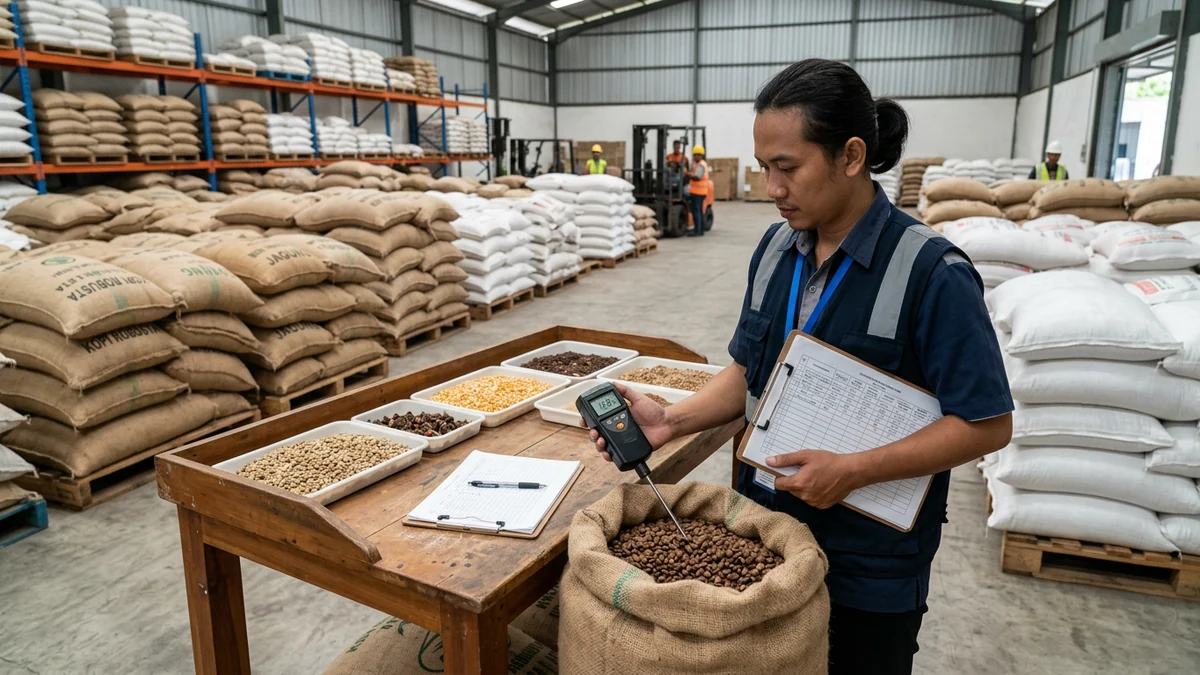
The correct moisture target depends on the commodity and the buyer specification. Coffee, corn, dried ginger, cocoa and spices cannot be handled with one universal number. What matters is that the supplier understands the target for the product being sold, checks moisture before packing, and avoids mixing dry material with wetter material from another batch.
A practical mistake is drying only the top layer or testing only a sample that looks good. Moisture can be uneven inside sacks, under tarpaulins or between different harvest days. For commercial lots, buyers often want proof that the sample represents the lot, not just the best-looking part of it.
Sorting is how a batch tells the truth
Sorting is not about making a product look perfect. It is about making the lot honest. A buyer can accept a lower grade if the grade is clear and consistent. What creates distrust is a mixed lot: clean material on top, defects hidden inside, different sizes mixed without explanation, or old and new stock combined in the same packaging.
Good sorting usually separates visible defects, foreign material, damaged pieces, undersized material and anything affected by mold or insect activity. For coffee, sorting may include separating underripe, overripe, broken or black beans. For corn, it may include damaged kernels, stones, husks and discolored material. For ginger or dried spices, it may include soil, broken pieces, excessive fiber, moldy pieces or inconsistent dryness.
When sorting is done well, negotiation becomes easier. The buyer can discuss price based on the actual grade. When sorting is weak, the buyer must add a risk margin or reject the lot because the true condition is unclear.
Packaging protects more than appearance
Packaging is often treated as the final step, but in trade it is part of the product. A good package protects the commodity from moisture, contamination, pressure, tearing and confusion during handling. It also carries information: product name, lot number, weight, origin, packing date and sometimes grade or moisture result.
The best packaging choice depends on the route. A short local delivery may need different protection from a shipment that will sit in a warehouse, be loaded into a truck, pass through a port or wait for inspection. If a commodity is hygroscopic, easily absorbs odor, or breaks under pressure, the package must match that risk.
Cheap packaging can become expensive when sacks tear, labels fall off, or buyers cannot separate one lot from another. For buyers, a clean and consistent package tells them that the supplier is thinking beyond harvest day.
What buyers actually look at before trusting a lot
Before a buyer trusts a shipment, the first review is usually simple: does the product match the sample, does the moisture look controlled, are defects within expectation, is the lot clean, and can the supplier explain where it came from?
More serious buyers may also check whether each sack belongs to the same batch, whether the total weight is consistent, whether there are signs of pests or mold, and whether the product has been stored away from chemicals, fuel, animals or wet flooring. For export or industrial use, laboratory testing and formal specifications may be required.
The important point is that quality is not only inspected at the end. It is built through small decisions: drying surface, storage floor, turning schedule, sorting table, sack type, label habit and recordkeeping. Weakness in one step can affect the whole lot.
A simple lot check before shipment
Before offering a lot to a buyer, suppliers can use a basic internal check. First, confirm the batch identity: harvest area, collection date, processing date and storage location. Second, inspect several sacks from different positions, not only the easiest sack to open. Third, check for odor, dampness, insects, dust, stones and obvious grade differences. Fourth, compare the lot with the sample that will be sent to the buyer.
If the sample is cleaner than the lot, the supplier is creating a future dispute. If the lot is better than the sample, the supplier may be underpricing the product. The sample should represent the lot honestly.
Documents that support quality
Documentation does not need to be complicated at the beginning. A small supplier can start with batch notes, packing dates, weights, drying notes and photos of the lot before shipment. For larger buyers, documents may include moisture test results, grading notes, fumigation or phytosanitary documents where applicable, invoices, delivery orders and certificates required by the destination market.
Records help solve disagreements. If a buyer reports a problem, the supplier can trace which batch was involved, when it was packed, how it was stored and whether the issue may have happened before or after delivery.
What small suppliers can improve first
The most realistic improvements are often simple: keep products off wet floors, separate lots by date and grade, avoid mixing uncertain material into clean lots, label sacks clearly, and keep a basic logbook. A moisture meter, clean tarpaulin, raised pallet and consistent sorting table can create more value than a larger warehouse with poor discipline.
For buyers, these habits reduce uncertainty. For suppliers, they reduce disputes and make it easier to ask for better prices when quality is genuinely better.
The sample must represent the lot
In commodity trade, the prettiest sample can create problems if it does not represent the shipment. Buyers become cautious when the sample looks clean but the delivered lot contains wetter material, mixed sizes, off-odors or foreign matter. A trustworthy supplier builds a sampling habit that reflects the actual lot.
This is especially important for Indonesian products that may pass through several collectors before reaching a warehouse. If lots from different days or villages are mixed without notes, the seller may lose the ability to explain quality differences later.
A small pre-shipment check can prevent large disputes
Before loading, suppliers can recheck moisture, visible defects, sack condition, labeling and total quantity. The point is not to create bureaucracy; it is to catch small issues before transport makes them expensive. Once a shipment has moved, correcting a disagreement is harder for both sides.
How the references support this article
The sources below provide background on post-harvest operations, food trade and commodity outlooks. Market numbers can change, so this article should be read as educational context rather than transaction advice.