
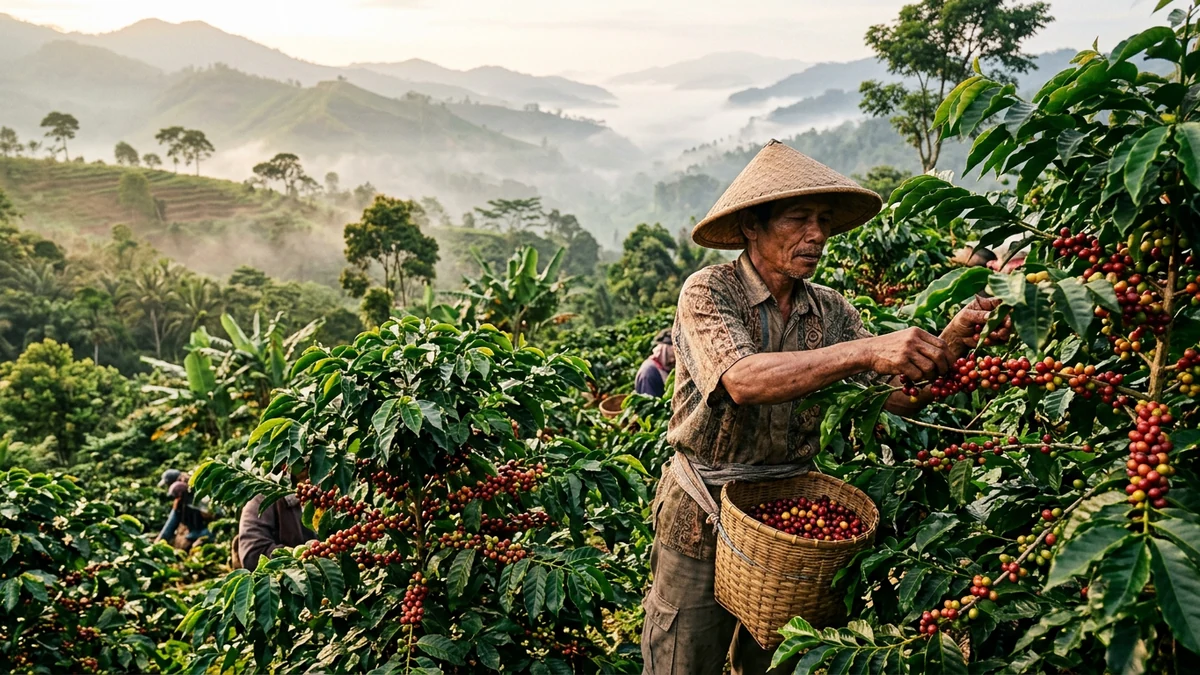
Indonesian coffee is often described with broad words: earthy Sumatra, balanced Java, complex Sulawesi. Those descriptions can be useful, but they are not rules. The taste of coffee is shaped by a mix of island climate, altitude, variety, soil, processing method, drying discipline, storage and roasting.
Thinking only by island can oversimplify the story. A careful lot from one village can taste cleaner than a poorly handled lot from a famous origin. Still, regional differences are worth learning because they help readers understand why Indonesian coffee is so diverse.
Origin is a starting point, not a flavor promise
Origin tells us where coffee was grown, but it does not guarantee flavor. It gives clues about climate, common varieties, processing habits and local market structure. After that, farm management and post-harvest handling decide how much of the potential remains in the bean.
Two farms on the same island may have different altitude, rainfall, shade, soil and harvest practices. Two processors may use different fermentation times or drying methods. Two roasters may develop the same green coffee in very different ways. This is why origin should be read as context, not as a fixed flavor label.
Sumatra: earthy notes and wet-hulling context
Many Sumatran coffees are associated with heavy body, herbal tones, spice, low acidity and earthy depth. One reason is the common use of wet-hulling, locally known as giling basah, in parts of Sumatra. This method removes parchment when the bean still has relatively high moisture compared with fully washed coffees dried in parchment.
Wet-hulling developed partly as a response to local conditions, including humidity, rainfall and the need for faster market movement. It can create distinctive cup character, but it also requires careful handling. If drying, sorting and storage are weak, the same process can produce musty, rough or inconsistent flavors.
Java: balance, history and farm management
Java has a long coffee history, and many Javanese coffees are known for balance, moderate acidity and a steady profile. Some lots show cocoa, nut, spice or mild fruit notes. But Java is not one flavor. Estate systems, smallholder farms, altitude and processing choices all create variation.
Because Java has developed agricultural infrastructure in many areas, post-harvest management can be more organized in some supply chains. That does not automatically make every lot better, but it can help with consistency when farms, processors and buyers maintain clear standards.
Sulawesi: clean structure and careful sorting
Sulawesi coffees, especially from well-known highland areas, are often valued for structure, sweetness, spice and clarity. Some lots show a clean cup with firm body and layered aromatics. Again, the outcome depends on cherry selection, processing, drying and storage.
Careful sorting is especially important because buyers looking for higher-quality Indonesian coffee often expect fewer visible defects and more consistent moisture. A Sulawesi label alone does not create quality. The lot must prove it through cup result and physical condition.
Why the same island can produce different cups
Even within Sumatra, Java or Sulawesi, flavor can change from one valley to another. Altitude affects temperature and cherry development. Shade affects plant stress and ripening speed. Soil nutrition affects plant health. Rainfall affects harvest and drying. Processing changes acidity, body, clarity and fermentation character.
Storage also matters. Green coffee can lose quality if it is stored in humid conditions, exposed to odor, or shipped before moisture is stable. A good harvest can become a disappointing cup if post-harvest control fails.
How readers can compare Indonesian coffees fairly
The fairest way to compare Indonesian coffees is to control the brewing method and taste several origins side by side. Use the same grind range, water, ratio and brew time. Note aroma, acidity, body, sweetness, aftertaste and any defect-like flavors. Do not judge only by whether the coffee matches a stereotype.
For buyers, the better questions are practical: what is the process, what is the moisture condition, how was the coffee dried, how recent is the crop, and does the cup match the physical quality? Those questions reveal more than island name alone.
Origin labels are a starting point, not a guarantee
A label such as Sumatra, Java, Sulawesi or Bali gives a clue about growing environment and local trade habits, but it does not guarantee flavor by itself. Variety, altitude, harvest selectivity, processing, drying, storage and roasting all shape the cup.
This is why two coffees from the same island can taste different, and two coffees from different islands can sometimes feel surprisingly close. The better question is not only “where is it from?” but “how was this lot grown, picked, processed and stored?”
A more useful way to compare coffees
For everyday drinkers, comparison becomes clearer when coffees are brewed with the same ratio, grind and water. For buyers, comparison also requires defect checks, moisture stability and sample consistency. Origin is meaningful when it is connected to lot-level evidence.
How the references support this article
The sources below support the general background on coffee quality, post-harvest handling and trade. Practices still need to be adjusted to variety, weather, farm scale and buyer specification.