
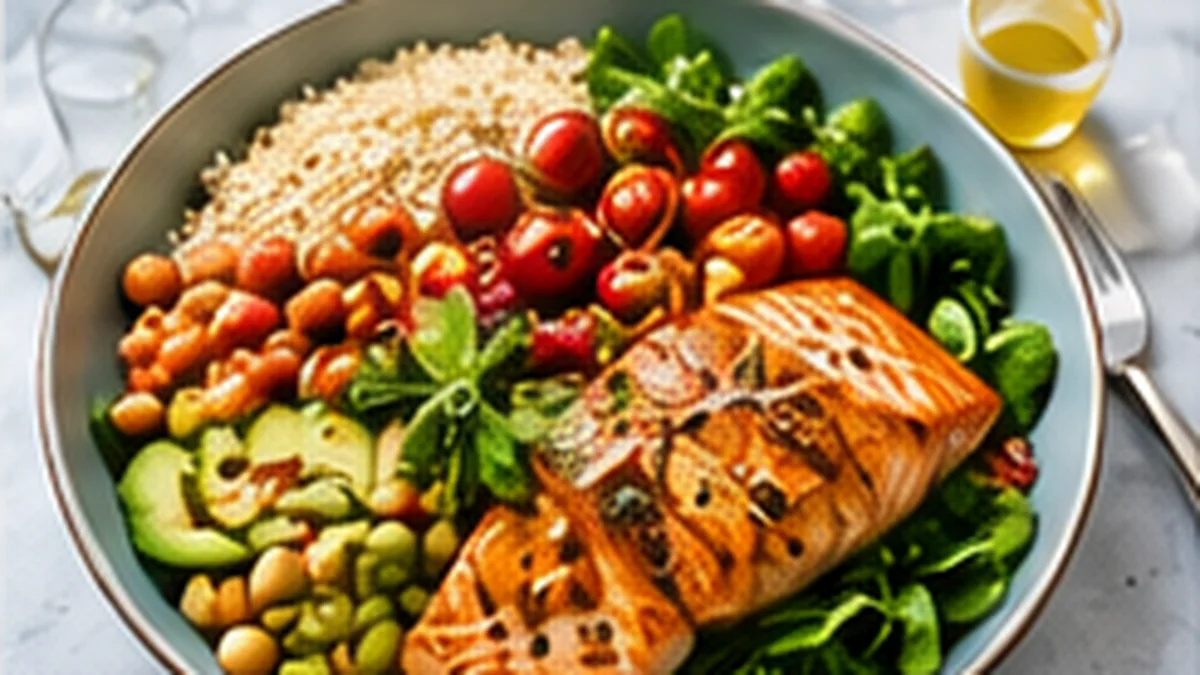
Plant-forward does not mean complicated
Plant-forward eating puts plants at the center of the plate without requiring every meal to be fully vegan. Vegetables, beans, lentils, tofu, tempeh, whole grains, nuts and fruit become the main structure, while animal foods can be reduced or used as a side.
This approach is easier to sustain than a strict rule that ignores budget, culture or family taste. Good meal prep makes healthy food convenient before hunger and busy schedules take over.
Build meals from components
Meal prep works better when components are prepared separately: cooked grains, roasted or steamed vegetables, protein, sauce, fresh herbs and crunchy toppings. This prevents every meal from tasting identical.
A container of rice, beans, sautéed greens and peanut sauce can become a bowl today, a wrap tomorrow and a soup base later. Variety comes from assembly, not from cooking from zero each time.
Protein deserves planning
Plant-forward meals need enough protein to feel satisfying. Tempeh, tofu, eggs, beans, lentils, edamame, peanuts, yogurt or fish can be planned according to preference. Without protein, a meal may look colorful but leave people hungry quickly.
Texture also matters. Crispy tempeh, soft beans, roasted chickpeas or boiled eggs make meals more enjoyable and reduce the temptation to abandon the plan.
Keep sauces separate until serving
Sauces make plant-forward meals enjoyable, but they can make food soggy if mixed too early. Chili-lime dressing, peanut sauce, yogurt sauce, soy-ginger dressing or herb oil should often be stored separately.
Separate sauces also make the same base taste different. A grain bowl can move from Indonesian-inspired to Mediterranean-style simply by changing the sauce and toppings.
Respect food safety in meal prep
Prepared food still needs safe cooling and storage. Use clean containers, cool cooked food promptly, keep refrigerator temperatures cold and avoid storing high-moisture mixed meals too long. Fresh greens should be kept dry until use.
Meal prep is healthiest when it is safe. A beautiful container is not useful if food has been left warm for hours or kept past its practical life.
Meal prep works when food safety is planned with convenience
Plant-forward meal prep can fail when it focuses only on recipes. Cooked grains, beans, sauces and cut vegetables need cooling, clean containers and realistic storage times. A beautiful set of meals is not useful if it sits too long at room temperature before refrigeration.
A more reliable routine is to prepare base ingredients, cool cooked foods quickly, keep wet sauces separate when needed and label containers by date. This keeps the meal plan flexible without turning the refrigerator into a guessing game.
How the references support this article
The sources below support general food safety, storage and handling principles. For medical, industrial or regulatory decisions, readers should follow the applicable official guidance.
Texture and safety need different plans
Some foods keep their texture well for several days, while others become watery or dull. Beans, roasted vegetables, grains and sauces can be prepared ahead, but leafy greens, crunchy toppings and delicate herbs often work better when added later.
Food safety adds another layer: cooked foods should cool quickly, containers should be clean, and meals should be rotated by date.
Making meal prep realistic
A realistic meal-prep plan leaves room for busy days. It uses sturdy ingredients for the first few days, keeps sauces separate when needed and avoids preparing delicate items too early. This protects both texture and food safety.
It also helps to plan how leftovers will be reheated. Food that is cooked safely can still become risky if it is cooled slowly, stored too long or reheated unevenly.
Making healthy eating easier to repeat
Meal prep works when it reduces decisions. Cooked grains, washed vegetables, prepared beans and simple sauces can help a household eat better during busy days. But the plan must stay realistic; if meals become boring or unsafe to store, the system fails.
A good plan leaves room for fresh additions and uses safe storage as part of the recipe, not as an afterthought.