
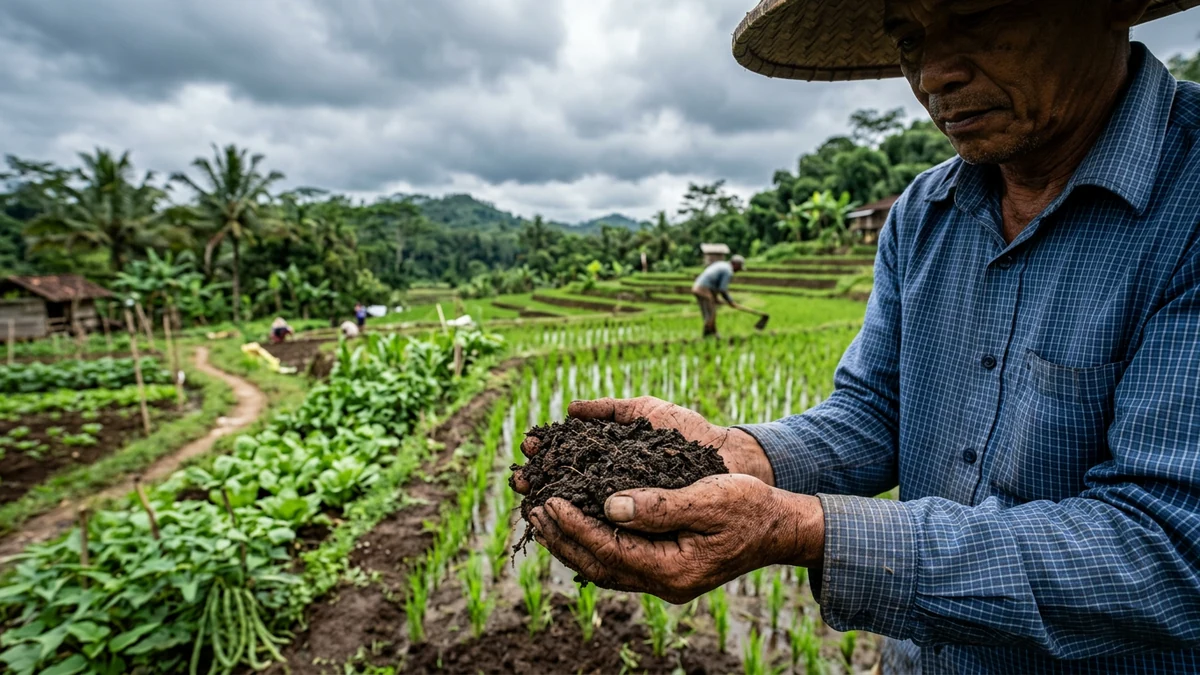
For many small farmers, unpredictable weather is not an abstract climate issue. It appears as a seedbed that dries too quickly after planting, a field that floods after one heavy rain, a fertilizer application washed away before the crop can use it, or a harvest delayed because the soil is too wet to enter. When these events happen repeatedly, the first part of the farm that pays the price is usually the soil.
Protecting soil does not always begin with large investments. It often begins with better observation: which corner dries first, where water enters the field, where runoff leaves, which bed stays compacted, and which area gives weak plants even when the seed and fertilizer are the same. Those details help a farmer choose practical improvements that fit the land instead of copying a method from another area.
Weather risk is also soil risk
Unpredictable weather creates two opposite problems. Too little rain leaves seedlings stressed and limits nutrient movement. Too much rain removes topsoil, pushes air out of the root zone, spreads disease and makes field work late. The same farm can experience both problems in one season: dry weeks after planting, followed by sudden storms when the crop is still young.
Healthy soil cannot remove all weather risk, but it can reduce the damage. Soil with better structure lets rain enter more gradually, holds moisture longer, and gives roots more space to recover after stress. Soil that is bare, compacted or low in organic matter reacts more sharply to both drought and heavy rain.
Keep the ground covered longer
Bare soil is vulnerable. When strong rain hits uncovered soil, small particles detach, crust forms on the surface, and water runs away instead of soaking in. During hot dry periods, the same bare surface loses moisture quickly. Keeping the ground covered is one of the most affordable ways to protect soil on small farms.
Cover can come from mulch, crop residue, grassed edges, cover crops or careful weed management where appropriate. The right choice depends on the crop. Vegetable beds may use organic mulch or plastic mulch. Upland crops may benefit from leaving some residue after harvest. Perennial plots may use ground cover that is managed so it does not compete too strongly with the main crop.
The goal is not to make the field look untouched. The goal is to reduce the force of rain, slow runoff, protect soil organisms and keep the surface from overheating. Even partial cover is better than leaving the entire field exposed between crop cycles.
Erosion often starts small
Farmers usually notice erosion only after a visible channel forms, but soil loss begins earlier. Fine particles move first. They are often the part of the soil that holds nutrients and organic matter. A thin layer lost after every heavy rain may not look dramatic, yet over several seasons it can reduce fertility and make the field harder to manage.
Small signs matter: muddy water leaving the field, seedlings buried by washed soil, fertilizer granules collecting at the bottom of a slope, exposed roots, or a hard crust after rain. These signs show where water is moving too fast.
Simple responses include planting along the contour where possible, strengthening field borders, keeping grass strips in water pathways, improving bed direction, and slowing water before it reaches the lowest part of the field. On sloping land, the position of paths, drains and beds can be as important as the amount of fertilizer applied.
Drainage and infiltration belong together
Many farms think about drainage only as removing water quickly. That is important when water is standing around roots, but drainage should not simply throw away every drop of rain. Good water management balances two needs: letting useful water enter the soil and removing excess water before it damages the crop.
If drains are too aggressive, a field can become dry soon after rain. If there is no drainage, water sits too long and weakens the roots. A farmer can observe how long water remains after heavy rain, whether the crop yellows in wet zones, and whether the soil becomes hard after drying. Those clues help determine whether the field needs deeper channels, raised beds, more organic matter, or better outlet maintenance.
Planting decisions when seasons shift
Uncertain seasons make planting calendars harder to follow. A date that worked for years may become less reliable if the first rains arrive late or stop suddenly. Farmers can reduce risk by watching actual field conditions, not only calendar habits. Planting into soil that is too dry may reduce germination. Planting into soil that is too wet may compact the bed and invite disease.
Where possible, staggered planting can reduce the chance that the entire crop faces the same stress at once. Farmers can also choose varieties, bed height, spacing and crop sequence with water risk in mind. These decisions are practical, not theoretical. A farmer who knows which plot floods first may plant a more tolerant crop there or delay planting until drainage is improved.
A simple field routine for small farms
A useful routine can be very simple. After heavy rain, walk the field and mark where water entered, where it stood, and where it left. During dry weeks, check which beds wilt first. After harvest, compare yields from different parts of the plot and ask whether soil condition, water movement or compaction explains the difference.
Before the next planting, repair the most obvious weak points first: blocked drains, bare slopes, compacted paths, low beds in wet areas, and places where runoff cuts across the field. A small repair made at the right location can protect more value than a large input applied without understanding the field.
Records turn observation into decisions
Small notes help farmers see patterns. Record heavy rain dates, dry spells, planting dates, germination problems, fertilizer timing, drainage problems and harvest results. Over time, these notes show which fields are most sensitive to weather and which practices actually helped.
For small farms, the strongest soil protection often comes from combining local memory with simple records. The farmer already knows the land; the record helps that knowledge become a repeatable decision instead of a guess.
Soil health is visible before it is measured
Laboratory tests are useful, but farmers can observe many early signs in the field. Soil that crusts after rain, cracks quickly in dry weather, smells sour, holds standing water or produces shallow roots may need attention. Earthworms, crumb structure and steady infiltration are better signs.
The practical goal is not to chase one perfect nutrient number. It is to build a soil system that holds water, allows roots to breathe, supports biology and releases nutrients steadily across the season.
How the references support this article
The sources below support general principles on farming, soil, water and post-harvest practice. Field conditions vary, so practical decisions should be adapted to local conditions.