
Higher yield is useful only if the land can keep producing
Modern farming often measures success in yield per hectare. That number matters, especially as demand for food grows. But yield becomes fragile when soil structure collapses, water is wasted, pests become harder to manage or input costs rise faster than income.
The better question is not simply how to produce more this season. It is how to produce reliably for many seasons. That requires farming systems that treat land as productive capital, not as a one-time resource.
Soil structure is the foundation of efficient production
Healthy soil holds water, allows roots to breathe and supports biological activity. When soil is compacted, bare or low in organic matter, farmers may need more water and fertilizer just to keep crops alive. Inputs become less efficient because the soil cannot hold and deliver them well.
Modern soil care includes reducing unnecessary disturbance, adding organic matter, using cover crops where possible and avoiding traffic on wet soil. These habits do not look dramatic, but they improve the field’s ability to support stronger crops.
Precision does not always mean expensive technology
Precision farming can include sensors, drones and satellite data, but it can also begin with simple observation. A farmer who records which field floods first, where leaves yellow, where weeds dominate and where yield drops is already building a precision map.
The point is to apply the right input in the right place at the right time. Blanket fertilizer or irrigation can waste money and damage the field. Targeted decisions reduce waste and often make production more resilient.
Crop diversity reduces pressure on the field
Growing the same crop repeatedly can concentrate pests, diseases and nutrient demands. Rotation, intercropping or seasonal diversification can interrupt pest cycles and balance soil use. The right system depends on market access, climate and labor, but diversity often reduces risk.
Diversity can also protect income. If one crop faces poor price or weather, another may help stabilize the farm. Modern farming is not only biological; it is also financial risk management.
Water must be managed as a limited input
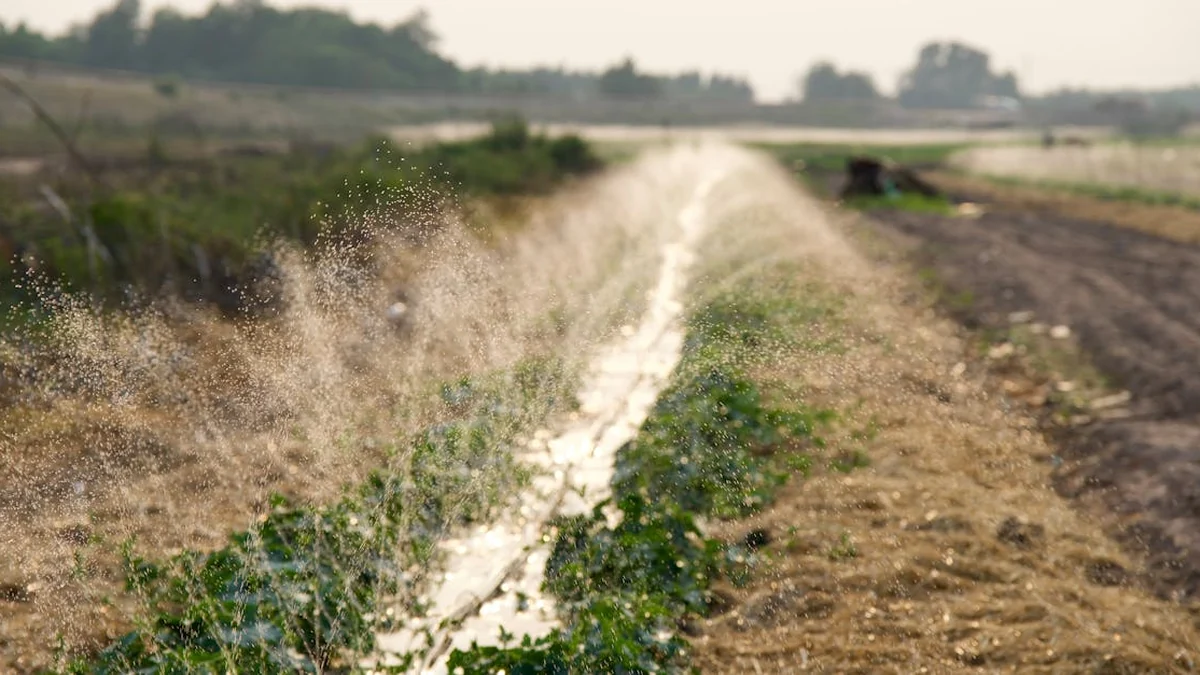
Water productivity matters as much as water availability. Drip irrigation, mulching, field leveling, drainage and irrigation scheduling can reduce stress without wasting water. In rain-fed systems, water management may focus on capturing rainfall, reducing runoff and improving infiltration.
Poor water management exhausts land by causing erosion, salinity, compaction or root disease. Better water control supports yield while protecting the field’s long-term function.
The goal is a farm system that learns
Modern farming improves when records are used. Yield, input cost, pest pressure, rainfall, labor needs and buyer feedback should inform the next season. Without records, farmers repeat decisions based on memory and hope.
A farm that learns can increase production without exhausting the land because each season becomes evidence for the next. Sustainability is not a slogan; it is a management habit.
Modern farming is practical coordination
Modern farming is not only tractors, sensors or large estates. It is the coordination of soil, water, seed, labor, animal health, input timing, records and market demand. A small farm can be modern if decisions are based on observation and evidence instead of habit alone.
For example, changing planting date after repeated flooding, separating harvest lots by maturity, or recording which variety performs better in a dry spell are modern decisions even without expensive equipment.
How the references support this article
The sources below support general principles on farming, soil, water and post-harvest practice. Field conditions vary, so practical decisions should be adapted to local conditions.
Small decisions create modern farming
A farmer who separates harvest lots by maturity is practicing quality management. A farmer who compares yield after changing spacing is using field data. A farmer who adjusts irrigation after observing root stress is managing risk. These are modern practices even without large machines.
The practical value of modern farming is that it makes decisions easier to explain and repeat.
What makes a farming article practical
Farming advice becomes more useful when it points to what can be observed. A farmer can look at root depth, leaf color, pest pressure, soil moisture, animal behavior, labor timing and harvest quality. These observations help turn general principles into farm decisions.
The same article should also respect scale. A small farmer may not buy expensive equipment, but can still improve by separating lots, recording inputs, protecting soil cover and planning water more carefully.