
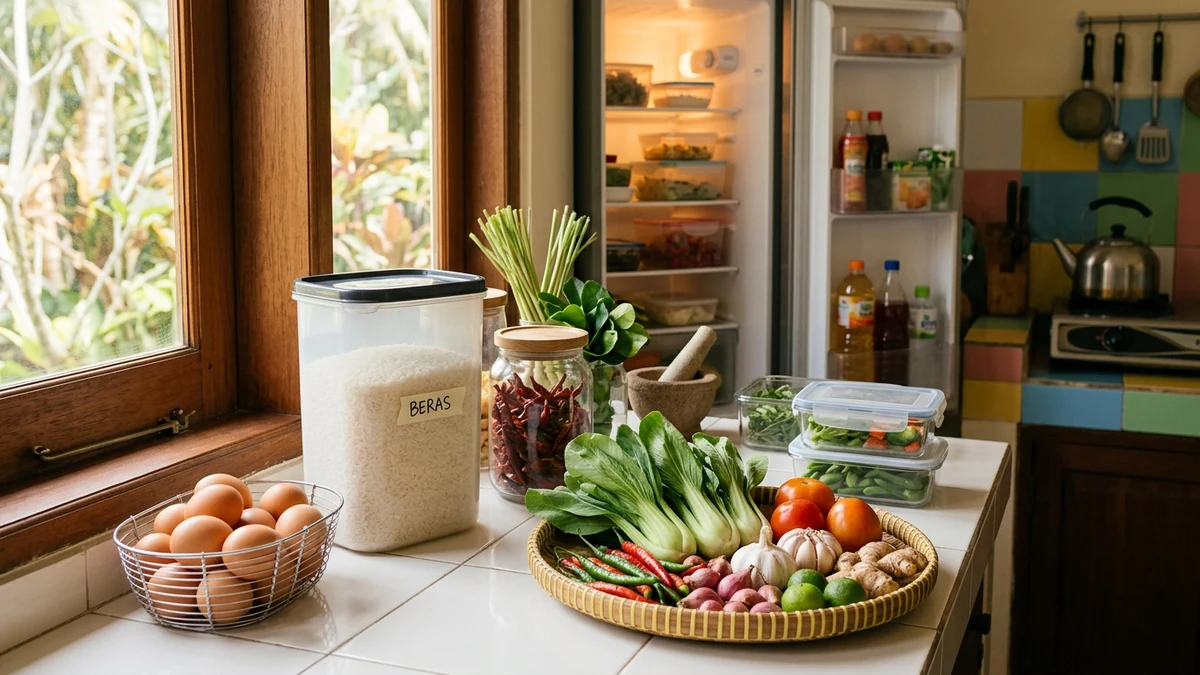
Keeping food fresh in Indonesia is not only a matter of owning a refrigerator. Warm weather, humidity, traffic delays, crowded markets and frequent power interruptions can all shorten the useful life of fresh food. A family may buy good fish, chicken, vegetables or fruit in the morning, but freshness can fall quickly if the food spends too long in the wrong temperature before it reaches the kitchen.
The most useful approach is to treat food storage as a chain of small decisions. The chain starts when food is chosen, continues during the trip home, and ends only when leftovers are cooled, stored and reheated safely. One weak step can reduce the benefit of all the others.
Freshness starts before food enters the fridge
Many storage problems begin before the refrigerator door is opened. Food that is already warm, bruised, wet or handled carelessly will not become truly fresh again in the fridge. Refrigeration slows quality loss and bacterial growth; it does not reverse poor handling.
When buying fresh food, families can look for signs that the product has been handled well. Fish should smell clean rather than sour or strongly ammonia-like. Chicken should be cold if sold chilled, not sitting for long periods in warm liquid. Leafy vegetables should not be crushed into wet piles. Fruit should be separated if some pieces are already overripe or damaged.
The market-to-home window
In a hot climate, the trip from market to home matters. Fresh meat, poultry, fish, milk and cooked foods should not sit for hours in a warm bag. If the trip is long, buying high-risk foods last is better than carrying them around while other shopping continues. A cooler bag or insulated bag helps, especially for fish, chicken and frozen food.
At home, sorting should happen quickly. Food that needs refrigeration should go in first. Vegetables that are wet from washing or rain may need drying before storage. Frozen products should be placed in the freezer before they begin to soften. These steps sound simple, but they often decide whether food lasts for days or spoils overnight.
Which foods need the most care
Not all foods carry the same risk. Raw chicken, meat, seafood, dairy products, cooked rice, coconut milk dishes, soups and leftovers need more careful temperature control. These foods can become unsafe before they look spoiled. Smell and appearance are useful clues, but they are not enough for safety.
Vegetables and fruit have different needs. Leafy vegetables usually lose quality quickly if they are wet and compressed. Tomatoes, bananas and some tropical fruits may be damaged by overly cold storage depending on ripeness. Garlic, onions, rice, flour, beans, coffee and spices need protection from moisture, insects and strong odors.
Refrigerator space should have a plan
A crowded refrigerator does not cool evenly. Cold air needs space to move. Raw foods should be separated from ready-to-eat foods so that drips from raw chicken, fish or meat cannot contaminate cooked food, fruit or vegetables. A simple rule is to keep raw animal products in closed containers on a lower shelf.
Families can also use labels or clear containers to avoid forgotten food. A small date sticker is often enough. Place older food in front and newer food behind it. Do not rely on memory when the fridge contains many containers from different days.
Humidity is the enemy of many dry goods
Indonesia’s humidity can damage dry goods even when they are not refrigerated. Rice, flour, crackers, spices, coffee, dried chilies and beans can absorb moisture, lose aroma, clump or attract insects. Packaging should be closed tightly after opening, and storage areas should be dry, clean and away from heat.
For coffee and spices, odor is also important. They can absorb smells from nearby items. Keeping them in sealed containers away from detergent, onions or strong-smelling foods helps protect flavor.
Leftovers need fast decisions
Leftovers are common in family kitchens, but they should not sit at room temperature for a long time. Large pots of soup, rice dishes or coconut milk dishes cool slowly. Dividing leftovers into shallow containers helps them cool faster before refrigeration. Reheating should be thorough, and leftovers should not be repeatedly cooled and reheated over many days.
The practical question is not “can this still be eaten?” but “has this food been kept under conditions that make it reasonable to eat?” If the answer is uncertain, especially for high-risk foods, discarding the food may be safer than trying to save it.
Small habits that help this week
Families can start with a few habits: buy high-risk foods last, go home soon after shopping, separate raw chicken and fish from ready-to-eat foods, use closed containers, dry wet vegetables before storage, label leftovers, and clean spills in the refrigerator quickly. These steps do not require a new kitchen; they require a more deliberate routine.
Food freshness is partly about saving money, but it is also about reducing avoidable illness and waste. In a warm climate, careful handling is not excessive. It is part of ordinary household management.
Practical food quality is decided by handling
For everyday readers, food quality is easier to understand through handling. Temperature, moisture, cleanliness, packaging, time and separation determine whether food remains fresh, safe and pleasant to eat.
A useful habit is to ask what changed between purchase and use: Was it kept cool? Was it exposed to air? Was it stored near raw food? Was it labeled? These questions create better decisions than relying only on appearance.
How the references support this article
The sources below support general food safety, storage and handling principles. For medical, industrial or regulatory decisions, readers should follow the applicable official guidance.