
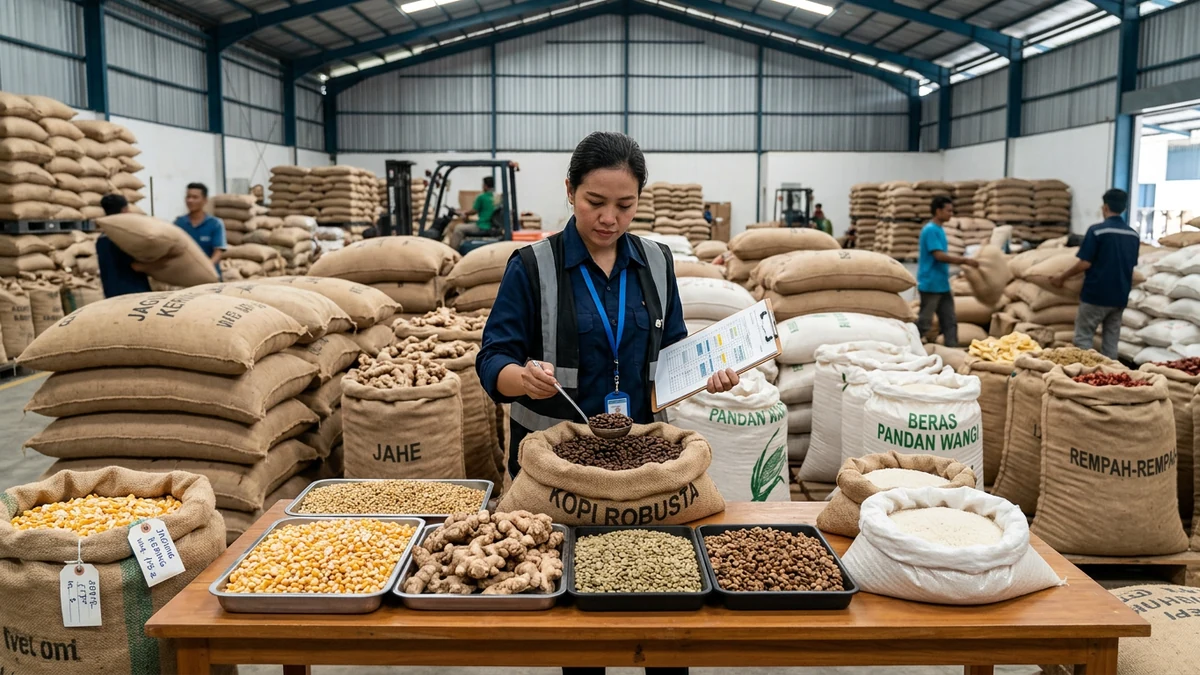
When people talk about agricultural commodities, they often imagine a simple movement from farmer to buyer. In reality, the journey is a chain of decisions. A product may pass through a farmer group, village collector, drying area, local warehouse, trader, transporter, processor, exporter or industrial buyer before it becomes a stable commercial lot.
This journey matters because value can be created or lost at every handover. A crop that is harvested well can lose value if it is mixed, stored damp or transported without records. A modest harvest can earn better trust if it is handled consistently and explained clearly.
The journey starts before a truck arrives
The supply chain begins in the field, not at the warehouse. Variety, harvest maturity, weather, drying space, water access and labor timing affect the condition of the product before the first buyer sees it. If a farmer harvests too early because rain is coming, or stores fresh produce too long before drying, the lot already carries a quality story.
For many Indonesian smallholders, the challenge is not lack of effort. It is the pressure of limited drying space, uneven access to storage, changing weather and the need for fast cash after harvest. These realities shape how commodities move.
Step one: farm-level collection
At farm level, products are usually gathered in small volumes. Some farmers sell directly after harvest, while others do initial drying, cleaning or sorting. The first buyer may be a village collector, cooperative, trader or nearby processor.
The important question at this stage is whether lots are kept separate. If products from different harvest days, moisture levels or quality levels are mixed too early, later grading becomes difficult. A collector may still move the volume, but the buyer further down the chain will see higher risk.
Step two: local aggregation and first sorting
Local aggregation turns many small harvests into a volume large enough for commercial sale. This is where the first serious quality decision often happens. The collector or cooperative may remove obvious defects, dry the product further, combine similar grades, check weight and prepare basic records.
Aggregation is useful because it gives buyers volume. It is also risky because poor mixing can hide problems. If one wet batch is combined with several dry batches, the entire lot may become unstable. If a few sacks contain stones, mold or insects, the buyer may question the whole delivery.
Step three: grading, storage and price signals
Grading converts a pile of agricultural material into something buyers can compare. Grade may be based on size, moisture, defect count, color, cleanliness, origin, processing method or intended use. A food processor, feed mill, roaster, exporter and local market buyer may all define quality differently.
Storage becomes important when the lot waits for price movement or transport. A warehouse is not only a place to put goods. It must control water, pests, odor, floor contact, airflow and separation between lots. When storage is weak, price gains can disappear through quality loss.
Step four: logistics, documents and handover
The final movement to a buyer depends on clear handover. Transporters need the correct quantity, destination, loading notes and packaging condition. Buyers need invoices, delivery notes, product descriptions and sometimes certificates or inspection results.
For domestic trade, documentation may be simple. For industrial supply or export, documentation can become more formal. What matters is that the product identity is not lost between the farm, collector, warehouse and buyer.
Where value is often lost
Value is commonly lost through delays after harvest, moisture variation, poor sorting, sacks placed on wet floors, unclear batch identity, rough loading, weak packaging and missing records. These problems do not always destroy the product immediately. They create uncertainty, and uncertainty usually reduces the price a buyer is willing to pay.
Another source of value loss is unclear responsibility. If a buyer finds damage, who knows whether it happened at the farm, collector, warehouse, truck or buyer facility? Without records, every dispute becomes harder.
What better trade readiness looks like
A trade-ready lot does not need to be perfect. It needs to be clear. The supplier can explain where it came from, how it was handled, what quality level it represents, how it was packed, and what documents are available. The sample matches the lot. The lot is labeled. The buyer does not need to guess.
For farmers and small suppliers, the most useful improvements are practical: separate harvest days, dry on clean surfaces, keep sacks off wet floors, record basic batch information, and avoid mixing different quality levels without a reason. These small habits make agricultural commodities easier to trust.
The sample must represent the lot
In commodity trade, the prettiest sample can create problems if it does not represent the shipment. Buyers become cautious when the sample looks clean but the delivered lot contains wetter material, mixed sizes, off-odors or foreign matter. A trustworthy supplier builds a sampling habit that reflects the actual lot.
This is especially important for Indonesian products that may pass through several collectors before reaching a warehouse. If lots from different days or villages are mixed without notes, the seller may lose the ability to explain quality differences later.
A small pre-shipment check can prevent large disputes
Before loading, suppliers can recheck moisture, visible defects, sack condition, labeling and total quantity. The point is not to create bureaucracy; it is to catch small issues before transport makes them expensive. Once a shipment has moved, correcting a disagreement is harder for both sides.
How the references support this article
The sources below provide background on post-harvest operations, food trade and commodity outlooks. Market numbers can change, so this article should be read as educational context rather than transaction advice.