Key Takeaways
- Methods of drying influence consumer impressions
- Geographic differences in coffee drying methods
- Financial implications of coffee drying processes
- Advancements in coffee drying technology
- Recommended strategies for effective coffee drying
How Drying Techniques Affect Buyer Perception
The post-harvest drying techniques wield a profound influence on how buyers perceive coffee quality, weaving an intricate tapestry of flavor and aroma. sun drying versus mechanical drying—two contrasting methods that not only create unique flavor profiles but also safeguard those precious aromatic compounds. Buyers often draw connections between the chosen drying method and the artistry involved in crafting each cup of coffee. This perception spirals beyond mere flavors, enveloping the quality and consistency of beans showcased in bustling marketplaces.
As a result, producers who embrace traditional or artisanal drying practices frequently find themselves commanding higher market prices; their products are cloaked in an aura of superior quality perceived by discerning consumers.
Moreover, clarity regarding these drying processes acts as a beacon for buyer confidence—especially among specialty coffee aficionados. Transparent dialogue about the nuances of various techniques fosters trust between producers and their clientele. When buyers grasp the complexities behind how their brew is dried—the environmental conditions at play, the meticulous methods employed—they're more inclined to recognize its true value. Such awareness fuels brand loyalty; consumers naturally gravitate toward companies that champion transparency and uphold exceptional standards within their production processes.
The Role of Transparency in the Coffee Supply Chain
The intricate dance of transparency within the coffee supply chain is nothing short of crucial in cultivating a robust trust between consumers and stakeholders alike. when coffee producers unveil the nitty-gritty details of their growing, harvesting, and drying techniques, buyers are equipped to make choices steeped in knowledge. This kind of openness isn’t just refreshing; it empowers consumers to sift through quality markers and ethical practices, effectively raising the bar across the entire market landscape. With each layer peeled back, transparency arms consumers with the ability to champion sustainable methods and fair labor practices.
But wait—there’s more! The ripple effect of these transparent practices can catapult brand loyalty into new heights. Today’s customers are increasingly drawn to companies that pull back the curtain on their production processes. When producers highlight their dedication to quality and ethical sourcing, they carve out a unique niche for themselves amid fierce competition. It’s a win-win situation: businesses not only see financial gains but also play a vital role in nurturing an accountable and sustainable coffee industry that resonates with conscientious consumers everywhere.
Regional Variations in Coffee Drying Practices
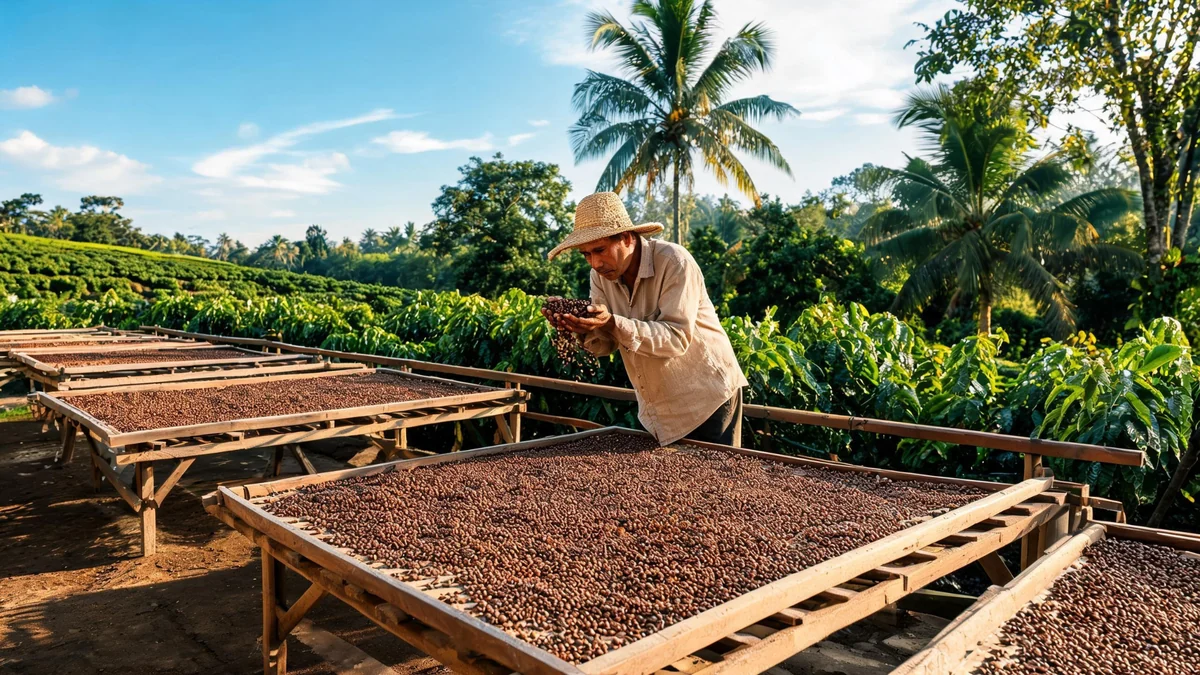
Coffee drying practices are a fascinating tapestry, woven from the threads of local climate, culture, and available resources, with each region displaying its own distinct flair. Take Brazil, for instance—many producers still cling to the age-old sun-drying methods. Picture vast patios where coffee cherries bask in sunlight like ripe fruit on a summer’s day. This natural dance allows beans to soak up sugars from their fruity casings, elevating sweetness to delightful heights.
Now shift your gaze toward Asia; here you’ll find an embrace of modernity with mechanical dryers stepping into the spotlight. These contraptions whip through processing at breakneck speed while deftly dodging spoilage risks that humidity throws their way—a stark contrast to their Brazilian counterparts.
Then there’s Ethiopia and Colombia—nations steeped in tradition that wear artisanal drying practices as badges of honor! Ethiopian farmers often employ raised beds that invite refreshing breezes for optimal airflow and consistent drying—a factor vital for developing those intricate flavors synonymous with Ethiopian beans. Meanwhile, Colombian growers fashion a hybrid approach: sun-kissed cherries mingling harmoniously with mechanical processes; it’s all about striking that delicate balance between efficiency and preserving quality.
These regional idiosyncrasies don’t just paint diverse flavor profiles but also sculpt the entire buyer experience—an intricate interplay shaping perceptions of quality across the globe!
Traditional Methods from Different Coffee-Growing Countries
In the vibrant land of Ethiopia, where coffee first unfurled its aromatic wings, the age-old art of drying beans takes on a sun-drenched dance atop raised beds. as sunlight spills across the landscape, it breathes life into each bean, facilitating a crucial flow of air that is nothing short of essential for achieving that perfect balance in drying. Farmers—ever vigilant—tend to their precious crop throughout the sunlit hours, skillfully dodging overexposure to those relentless rays and safeguarding an optimal moisture content. This meticulous method doesn’t merely preserve the beans’ innate characteristics; oh no! It elevates them, wrapping them in an allure irresistible to buyers hunting for that genuine taste of authenticity.
Now shift your gaze southward to Brazil—a sprawling realm where coffee is churned out en masse with mechanical precision reigning supreme. Efficiency and cost-effectiveness rule here like monarchs on a throne. Yet amid this industrial symphony, echoes of tradition persist; many producers remain loyal to natural methods as they lay coffee cherries out across expansive patios under the watchful eye of nature herself. The choice between these divergent paths? A delicate balancing act influenced by fickle regional climates and ever-shifting market whims. Traditional practices endure not just as relics but as vital threads woven into the tapestry of flavor integrity and cultural heritage within this beverage's journey from plant to cup.
| Country | Traditional Method | Description | Benefits |
|---|---|---|---|
| Ethiopia | Sun-Drying on Raised Beds | Beans are dried in the sun on raised platforms, promoting airflow. | Enhances flavor, protects from overexposure, maintains moisture content. |
| Brazil | Natural Processing on Patios | Coffee cherries are spread out on large patios to dry under the sun. | Cost-effective, allows for traditional flavor profiles, preserves authenticity. |
| Colombia | Washing and Wet Processing | Beans are fermented and washed, then dried in the sun or mechanical dryers. | Produces bright acidity and fruity flavors, encourages quality consistency. |
| Sumatra (Indonesia) | Giling Basah (Wet Hulling) | Beans are hulled while still moist, then dried quickly. | Results in unique earthy flavors, enhances body, and balances acidity. |
The Economic Impact of Coffee Drying
The economic ramifications of coffee drying ripple profoundly through the intricate web of the global coffee supply chain. You see, the methods employed to dry those precious beans don't just tweak production costs—oh no—they dance intricately with the final sale price too. Farmers who embrace cutting-edge drying techniques find themselves not only minimizing spoilage but also elevating the overall quality of their prized products. This leap in quality opens doors for them to demand higher prices on the market stage, a boon that enhances their livelihoods while nudging coffee farming towards sustainable practices.
Now, consider this: investments in efficient drying technologies emerge as pivotal players in shaping the economic terrain of coffee production. These innovations are not merely about raising standards; they resonate harmoniously with today's market trends that champion sustainability. As consumers increasingly crave traceable and premium coffees, producers armed with advanced drying capabilities stand poised to respond dynamically to these evolving demands. When these practices are properly woven into operations, they bolster buyer confidence like never before—a cascading effect ensues, fostering economic growth across coffee-producing regions and breathing new life into communities bound by this bean.
Cost-Effectiveness and Market Trends
The coffee industry is in the throes of dynamic transformation, a tumultuous dance propelled by shifting market demands and the relentless pressure of production costs. As consumers gravitate more towards premium, sustainably sourced brews, producers find themselves at a crossroads—juggling the delicate interplay between quality and profit margins. Enter efficient drying methods: these game-changers not only slash energy consumption but also trim labor expenses. With innovations like solar drying and mechanical dryers coming into play, there’s a dual benefit at hand; they diminish costs while simultaneously elevating the flavor profiles of those precious beans—making them irresistible to even the most discerning palates.
Market currents are unmistakably steering towards an insatiable appetite for traceable and ethically sourced coffee. Buyers now crave transparency in every step of processing—a factor that increasingly sways their purchasing choices. Producers who embrace cost-effective drying techniques carve out a competitive advantage, ensuring they deliver high-quality results without sacrificing profitability. This strategy dovetails beautifully with the larger movement advocating for sustainability within agriculture; eco-conscious technologies not only lure consumers but also captivate investors, fortifying their foothold in this ever-evolving marketplace.
- Increasing consumer demand for premium and ethically sourced coffee.
- Rising importance of transparency in the coffee supply chain.
- Adoption of innovative drying methods like solar and mechanical drying.
- Reduced energy consumption and labor costs through efficient production techniques.
- Strengthening market position by embracing sustainability practices.
- Potential for higher profit margins by aligning with consumer preferences.
- Attraction of investment opportunities through eco-friendly initiatives.
Innovations in Coffee Drying Technology
Recent strides in coffee drying technology have utterly transformed the processing landscape for coffee beans. Imagine moisture control systems and automated drying units sprouting up like wildflowers, empowering producers to fine-tune drying durations while deftly sidestepping the perils of over-drying or spoilage. These cutting-edge innovations not only safeguard the beans' integrity but also elevate their flavor profiles to new heights, ensuring that each coffee variety’s unique traits are lovingly preserved throughout the drying journey.
Moreover, solar drying technologies are making waves in sun-drenched regions—a veritable goldmine of renewable energy! These ingenious systems tap into nature's bounty to dry coffee efficiently, reducing reliance on traditional methods that often demand more resources than one might care to expend. By artfully weaving together time-honored practices with state-of-the-art tech, producers can cultivate a product that's not just consistent and high-quality but also ignites buyers’ confidence and champions a sustainable ethos within the industry.
Advances That Improve Quality and Efficiency
In the ever-evolving landscape of coffee production, recent technological innovations in drying methods have sparked a veritable revolution, transforming how producers uphold quality while simultaneously boosting efficiency. automated drying systems that operate within meticulously controlled environments, where every nuance of temperature and humidity is finely tuned to perfection. These groundbreaking advancements not only slash the chances for human error but also deftly sidestep the perils of over-drying or under-drying—a delicate balancing act now made simpler.
But wait, there’s more! Enter solar drying technologies—an ingenious leap forward that captures the sun’s renewable energy to cut costs and lessen environmental footprints. These cutting-edge systems come equipped with sensors that tirelessly monitor moisture levels in real-time, empowering farmers to nail down optimal drying conditions with pinpoint accuracy. By embracing these innovative tools, producers can supercharge productivity without compromising their product's integrity. The ripple effect? Enhanced efficiency in drying practices instills confidence among buyers regarding coffee quality, ultimately nurturing stronger bonds throughout the supply chain—an interconnected web thriving on excellence.
Best Practices for Optimal Coffee Drying
Optimal coffee drying practices dance on the delicate tightrope of preserving bean integrity while deftly sidestepping defects. It’s all about that even drying—an alchemical process that locks in those tantalizing flavor and aroma notes, the very essence of high-quality coffee. Enter mechanical dryers or specialized drying beds, the unsung heroes wielding precision control over temperature and humidity like a maestro conducting an orchestra. These techniques mitigate the lurking specters of mold and other insidious quality threats, promising a cleaner, more vibrant cup that sings with character.
The saga doesn’t end there; monitoring moisture content throughout this intricate ballet is paramount for achieving consistency that dazzles. Moisture meters come into play here, delivering pinpoint accuracy to ensure beans don’t tumble down the slippery slope of over-drying or under-drying. And let’s not overlook the ritualistic rotation of beans during drying—this practice promotes uniformity like clockwork! Such meticulous attention to detail doesn’t just elevate the overall quality; it also cultivates buyer confidence in this coffee's reliability and worthiness.
Techniques for Preserving Flavor and Aroma
The art of drying coffee beans—oh, it’s a dance of delicate precision! Proper techniques are pivotal in safeguarding the very essence—the flavor and aroma—that enthusiasts crave. the initial moisture content is like a silent conductor, orchestrating how those precious beans respond as they transition through the drying phase. With an eye on achieving that sweet spot of 10% to 12% moisture, growers juggle various methods—sun drying under the relentless gaze of the sun or mechanical drying with its controlled embrace—to avoid pitfalls like over-drying or under-drying. Both missteps spell trouble for taste profiles that should sing rather than stumble.
The saga doesn’t end there; temperature and humidity become crucial players in this unfolding tale. Too much heat? It’s akin to throwing a wrench into a well-tuned symphony, degrading those fragile compounds that lend complexity to each sip—a calamity for true coffee aficionados!
Then we delve deeper into controlled environments—a veritable sanctuary for volatile compounds vital to crafting a captivating bouquet. Shade drying emerges as an unsung hero here, preserving essential oils and aromatic treasures while maximizing flavor potential like magic! And let’s not forget about specialized racks or raised beds; these ingenious creations foster even air circulation and thwart mold's unwelcome advance, ensuring quality remains untarnished.
In sum, these meticulous methods converge harmoniously to yield beans that not only meet but exceed lofty standards—resonating beautifully with consumers' insatiable desire for rich flavors and intoxicating aromas. Isn’t it marvelous?
Conclusion
The elaborate dance of coffee drying is not merely a step in the process; it’s a crucial player that significantly influences the richness and character of the final brew. Dive into the myriad techniques, and you'll find they wield considerable power over both how producers operate and how buyers perceive value. With consumers increasingly curious about where their coffee comes from and how it's crafted, transparency within this intricate supply chain becomes non-negotiable. When buyers are well-informed, they can choose wisely—ultimately championing those who master effective drying methods.
Now, let’s talk innovation! Integrating cutting-edge technologies into coffee drying doesn’t just elevate quality—it harmonizes perfectly with market trends leaning toward sustainability and efficiency. Producers daring enough to embrace these best practices stand to refine their offerings while keeping pace in an industry that's anything but static. By shining a spotlight on the significance of drying techniques, everyone involved in the coffee journey—from bean to cup—can cultivate a deeper respect for the craft behind each sip. This newfound appreciation? It has the potential to forge robust partnerships and boost consumer loyalty amid fierce competition in today’s bustling marketplace.
FAQs
What is the significance of drying techniques in coffee production?
the art of drying! It’s not just a step—it's a pivotal dance in the grand performance of coffee production. These techniques wield immense power over flavor profiles, quality, and that elusive marketability factor. When done right, drying preserves the beans’ innate characteristics while warding off spoilage—a guardian angel for buyer confidence!
How do different drying methods affect coffee flavor?
sun-drying under golden rays, mechanical systems buzzing away, or hybrid approaches weaving together traditions and technologies. Each method scrambles the chemical makeup of those precious beans like an alchemist’s brew! This leads to delightful variations in acidity, sweetness, and aroma—ultimately painting a rich tapestry of flavors for consumers to savor.
Why is transparency important in the coffee supply chain?
Transparency—it’s the golden thread stitching trust between producers and buyers. When buyers are privy to how their beans are dried and processed—that intricate ballet impacting flavor and quality—they’re more likely to sip with confidence. It transforms mere transactions into relationships steeped in understanding.
What are some traditional coffee drying methods used in various countries?
Enter a world where tradition reigns supreme! In Brazil's sun-kissed expanses, you might find beans sprawled out on patios soaking up warmth; meanwhile, Colombia embraces raised beds as its canvas for crafting perfection. Each method tells tales shaped by local climates and cultural nuances—each influencing that final taste explosion waiting to be brewed.
How do innovations in coffee drying technology improve quality?
Innovations burst forth like new life—from enhanced airflow mechanisms whispering through rows of beans to precise temperature controls cradling them gently; moisture monitoring tech stands guard against mishaps! These modern marvels refine every aspect of the drying journey—preserving bean integrity while elevating flavor profiles beyond imagination. Efficiency meets consistency on this flavorful quest!
