
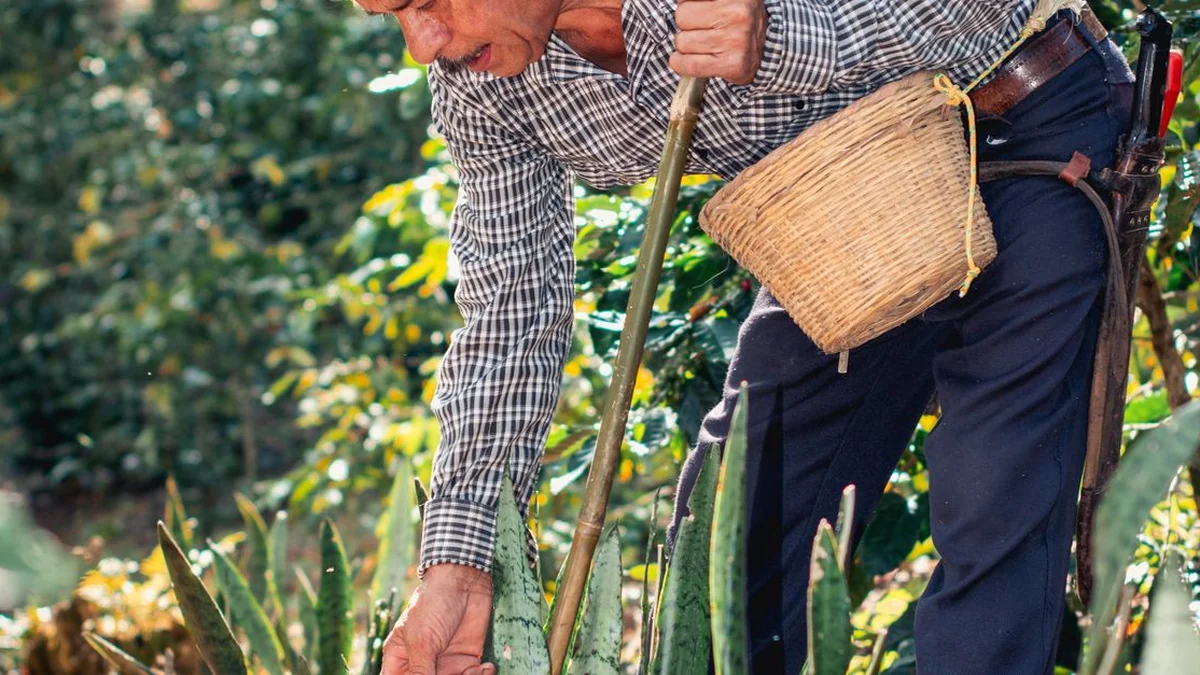
Coffee is a fruit crop before it is a beverage
Before coffee becomes a roasted bean, it is a fruit on a tree. Farmers manage that tree through seasons of flowering, fruit set, cherry development and harvest. Each stage depends on rainfall, soil condition, shade, nutrition and disease pressure.
Seeing coffee as a fruit crop changes how quality is understood. A good cup is not only a roasting achievement. It is the result of fruit grown, picked and stabilized carefully.
Farm management prepares the tree for harvest
Pruning, shade control, weed management and soil care help the tree balance growth and fruit production. Too much shade can slow drying after rain and increase disease pressure. Too little shade can raise heat stress and reduce resilience during dry periods. The right balance depends on location.
Nutrition is equally practical. Trees need enough nutrients to support cherries through development. When nutrition is weak, cherries may ripen unevenly or produce smaller beans. Farmers may not see the problem fully until sorting or roasting.
Harvest is a quality filter
Harvest converts farm potential into real coffee quality. Selective picking separates ripe cherries from immature and damaged fruit. Strip picking is faster but often mixes maturity levels. Mixed cherries require more sorting later and can reduce cup clarity.
On small farms, harvest may happen in rounds. A farmer returns to the same trees as cherries ripen. This requires labor planning, but it protects quality because not all cherries mature at once.
Processing removes fruit and shapes stability
After harvest, the fruit must be handled quickly. In washed coffee, pulp is removed and mucilage is fermented or washed away. In natural coffee, whole cherries dry with fruit attached. In honey processing, some mucilage remains during drying. In wet-hulling systems, parchment is hulled at a higher moisture level than in fully washed systems.
Each method creates different risks. Washed processing needs clean water and controlled fermentation. Natural processing needs careful drying to avoid mold or over-fermentation. Wet-hulling needs strong attention to moisture and storage because beans are more vulnerable during handling.
Drying and resting turn coffee into a stable product
Drying lowers moisture so coffee can be stored and transported. Farmers and processors manage layer thickness, airflow, sun exposure and rain protection. Drying is complete only when the lot is stable, not merely when the surface feels dry.
After drying, coffee often rests before hulling and sorting. Resting helps moisture equalize inside the bean. Rushing this stage can create uneven behavior later in storage or roasting.
Green beans are the result of sorting, not just hulling
Hulling removes parchment or dried fruit layers, but green bean quality depends on sorting afterward. Defective beans, broken pieces, foreign material and size variation must be reduced. Sorting may be manual, mechanical or both.
By the time a buyer sees green beans, many farm decisions are already locked in. Good green coffee is not a raw accident; it is the outcome of a controlled chain from tree to bag.
Origin labels are a starting point, not a guarantee
A label such as Sumatra, Java, Sulawesi or Bali gives a clue about growing environment and local trade habits, but it does not guarantee flavor by itself. Variety, altitude, harvest selectivity, processing, drying, storage and roasting all shape the cup.
This is why two coffees from the same island can taste different, and two coffees from different islands can sometimes feel surprisingly close. The better question is not only “where is it from?” but “how was this lot grown, picked, processed and stored?”
A more useful way to compare coffees
For everyday drinkers, comparison becomes clearer when coffees are brewed with the same ratio, grind and water. For buyers, comparison also requires defect checks, moisture stability and sample consistency. Origin is meaningful when it is connected to lot-level evidence.
How the references support this article
The sources below support the general background on coffee quality, post-harvest handling and trade. Practices still need to be adjusted to variety, weather, farm scale and buyer specification.
A lot-level example from Indonesian coffee
A coffee described as “from Sumatra” can still vary depending on harvest selection, wet-hulling practice, drying surface and storage. Another Sumatra lot from a different village or exporter may show a different cup because the post-harvest path was different. The island name helps orientation, but the lot history explains the flavor.
For farmers and buyers, this means origin stories should be supported by practical evidence: cherry ripeness, process notes, moisture, defect count, storage time and sample consistency.