
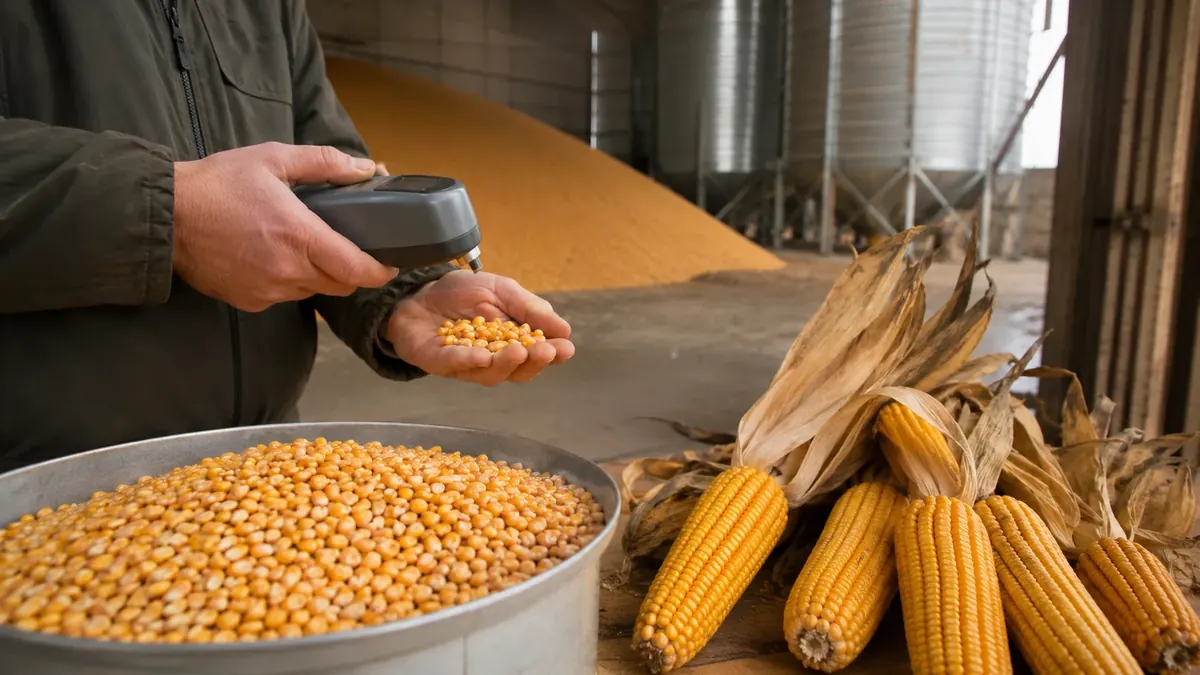
Moisture is the first quality gate
Corn quality often starts with moisture because wet grain heats more easily, invites mold and can lose value during storage. A buyer may accept a visual sample, but the moisture reading usually decides whether the lot is safe to store or needs further drying.
Farmers and collectors should avoid guessing moisture by touch. A calibrated meter, repeated sampling from different bags or points in the pile, and records by lot are far more reliable than a single reading taken from the driest corner.
Broken kernels and foreign matter change storage risk
Broken kernels expose starch and oil, giving insects and fungi easier entry. Foreign matter such as husk, soil, cob pieces and dust can block airflow and create warm spots inside bags or bulk piles.
Sorting and cleaning are not cosmetic steps. They reduce the chance that one dirty or damaged portion pulls down the value of the whole lot during inspection.
Storage needs airflow and separation
Corn that is stored too tightly against walls, directly on floors or under poor ventilation can collect condensation. Pallets, dry floors, spacing from walls and routine checks after rain help prevent hidden moisture pockets.
The simplest warehouse routine is to inspect odor, temperature, bag condition and insect activity on a schedule. A problem found early may be corrected; a problem found during loading usually becomes a price dispute.
Buyer readiness is built before the truck arrives
Before delivery, suppliers should know the buyer’s moisture limit, accepted defect level, preferred bag size, labeling requirement and sampling method. These details are more useful than a broad promise that the corn is “good quality”.
A trade-ready lot has consistent bags, clear lot identity and documents that match the physical goods. That makes weighing, checking and payment smoother for both sides.
Corn quality can change quickly after harvest
Corn is often discussed as a volume crop, but buyers usually care about moisture, broken kernels, foreign material, mold risk and storage condition. A lot that is acceptable at purchase can deteriorate if it is stored hot, stacked too tightly or exposed to humidity.
For small warehouses, simple habits matter: measure moisture before storage, keep sacks or bulk grain off wet floors, allow airflow, separate suspect lots and record when each lot enters and leaves. These records help prevent old grain from being mixed into a cleaner shipment.
How the references support this article
The sources below provide background on post-harvest operations, food trade and commodity outlooks. Market numbers can change, so this article should be read as educational context rather than transaction advice.
A warehouse example for corn
A corn lot may arrive with acceptable moisture, but if it is placed against a damp wall or mixed with older grain, risk increases quickly. Mold and odor problems often look sudden, but the cause may be several days of poor airflow or unrecorded mixing.
For small suppliers, a basic warehouse map helps. Mark where each lot is stacked, when it arrived, moisture at intake and whether it has been moved. That simple map can prevent confusion when a buyer asks which lot created a problem.
Why moisture is a business issue
Corn moisture is not only a technical number. It affects weight, storage life, mold risk, drying cost and buyer confidence. A seller who ignores moisture may appear to deliver more weight, but that weight can become a dispute if quality declines in storage.
For small aggregators, portable moisture checks and clear intake records can reduce arguments later. They also help decide which lots should be dried, moved quickly or kept separate.
How a small supplier can reduce rejection risk
A small corn supplier can reduce rejection risk by separating wet and dry lots, avoiding direct floor contact, checking for odor before shipment and keeping simple intake records. None of these steps require a large laboratory, but they make the shipment easier to explain.
If a buyer later questions the lot, the supplier can show when it arrived, how it was stored and whether it was mixed. That evidence protects business relationships.