
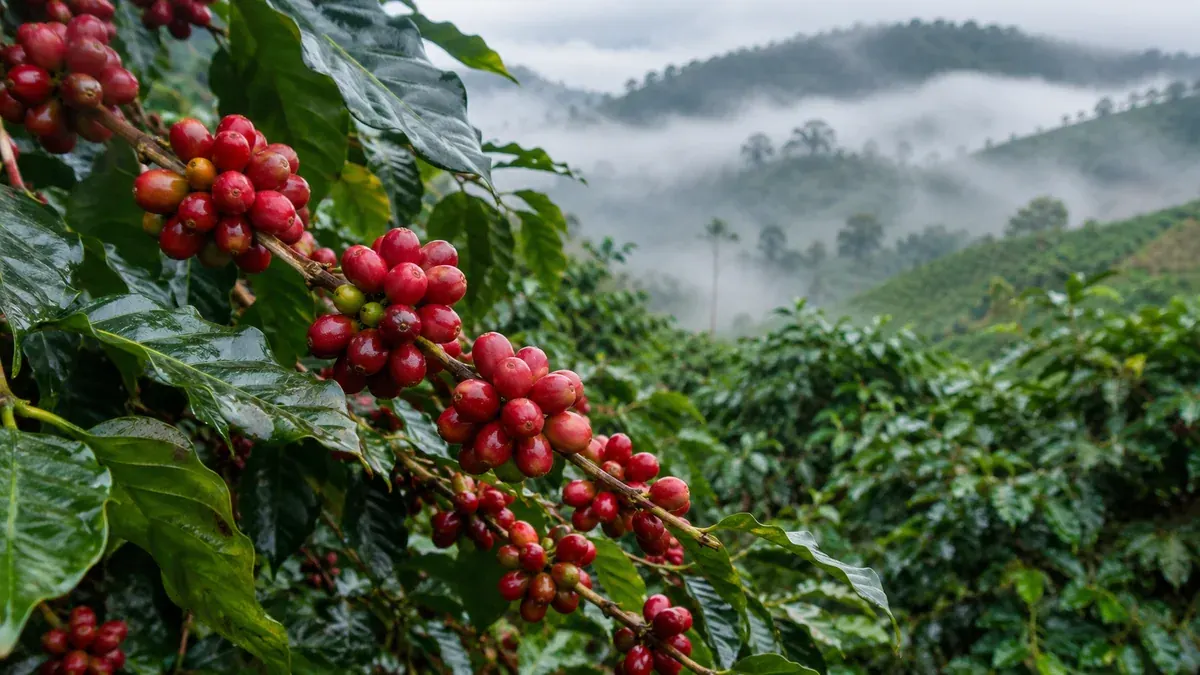
Arabica and Robusta are different crops
Arabica and Robusta are often compared only by taste, but they differ as plants too. Arabica is generally more sensitive to climate and disease, while Robusta is often more vigorous and tolerant in warmer lowland conditions.
This difference shapes farm decisions: altitude, shade, disease pressure, labor, processing capacity and market target all influence which species makes sense.
Flavor depends on more than species
Arabica is commonly associated with higher acidity, aroma complexity and sweetness. Robusta is often associated with stronger body, bitterness and higher caffeine. But careless processing can damage Arabica, and careful Robusta can be much better than stereotypes suggest.
Species gives a starting point, not a final verdict. Variety, maturity, fermentation, drying, storage and roasting all shape the cup.
Commercial use is purpose-driven
Arabica is widely used in specialty and single-origin markets. Robusta is important for espresso blends, instant coffee and products that need body, crema or cost efficiency.
The better coffee is the one that fits the product. A café blend, instant manufacturer and filter-coffee roaster may value different attributes.
Farmers should match crop to environment and buyer
Planting a fashionable species without matching the farm environment can create long-term problems. Disease pressure, water availability, temperature and buyer access should guide decisions.
Commercial success comes from fit: the right plant in the right place, processed to the right standard and sold to the right market.
Commercial differences are not only about taste
Arabica is often discussed for aroma and acidity, while Robusta is often discussed for body, caffeine and resilience. In trade, however, the difference also involves altitude, disease pressure, yield, processing cost, local demand and the role of each bean in blends.
A roaster may choose Robusta not because it is “lower quality” but because it gives crema, body or price stability in a specific product. A farmer may choose Arabica because a microclimate supports it and buyers reward its cup profile. The commercial decision depends on use, not only reputation.
How the references support this article
The sources below support the general background on coffee quality, post-harvest handling and trade. Practices still need to be adjusted to variety, weather, farm scale and buyer specification.
A lot-level example from Indonesian coffee
A coffee described as “from Sumatra” can still vary depending on harvest selection, wet-hulling practice, drying surface and storage. Another Sumatra lot from a different village or exporter may show a different cup because the post-harvest path was different. The island name helps orientation, but the lot history explains the flavor.
For farmers and buyers, this means origin stories should be supported by practical evidence: cherry ripeness, process notes, moisture, defect count, storage time and sample consistency.
What makes the article more than an origin story
Coffee education becomes more useful when origin is connected to handling. A reader may enjoy the story of a region, but quality depends on cherry selection, processing, drying, storage and roasting. Without these details, origin becomes a label rather than an explanation.
For buyers, lot-level detail matters: moisture, defect count, processing date, sample consistency and storage condition. For consumers, brewing two origins side by side with the same recipe is a simple way to taste differences more fairly.
What makes the lesson useful for drinkers and buyers
For drinkers, the practical lesson is to compare coffees under fair conditions: same brew ratio, similar roast age and clean water. For buyers, the practical lesson is to ask for lot-level information rather than relying only on a region name or processing label.
This dual view makes coffee education stronger. It respects both the sensory experience in the cup and the agricultural work that made the cup possible.